
Foreign investors have withdrawn over Rs 88,000 crore from Indian equities this month, driven by geopolitical tensions, a weak rupee, and concerns about rising crude oil prices.

The Reserve Bank of India (RBI) Governor Sanjay Malhotra is now confronting the classic growth-inflation tradeoff, a situation exacerbated by the West Asia war, which threatens to end the 'goldilocks period' of low inflation and robust growth.

In the present hyper-connected world, there are many domestic and global factors that affect financial markets. Of them, the most powerful and often least predictable are geopolitical events, which often boil down to one diplomatic headline.

Foreign investors have withdrawn a record Rs 1.14 lakh crore from Indian equities in March, driven by geopolitical tensions, a weakening rupee, and concerns about crude oil prices.

Indian equity benchmark indices Sensex and Nifty tumbled over 1 per cent for the third consecutive day, driven by a sharp rally in crude oil prices, massive selling in IT stocks, and unabated foreign fund outflows amid ongoing geopolitical tensions in the Middle East.

If TVK MLAs and ministers are perceived as clean, or demonstrably cleaner than their predecessors, the credibility dividend will be enormous. The voter will feel rewarded, points out Ramesh Menon.

Prime Minister Narendra Modi has appealed to citizens to adopt austerity measures, including avoiding destination weddings abroad and reducing edible oil consumption, to mitigate the impact of the West Asia crisis on India's economy.

Travel firms expect package prices to rise by 5 to 10 per cent, depending on destination and inclusions.

The rupee breached 90-levels against the greenback for the first time on Wednesday, falling 6 paise to 90.02 in early trade, as banks kept buying US dollars at higher levels and FII outflows continued.

A special court in Delhi has remanded I-PAC co-founder Vinesh Chandel to ten days of ED custody following his arrest in connection with a money laundering case linked to an alleged coal scam in West Bengal.
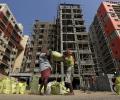
A Mumbai sessions court has denied pre-arrest bail to two individuals accused of misappropriating funds and fraud within a residential society in Wadala, citing the necessity of custodial interrogation.

Indian benchmark indices Sensex and Nifty experienced a sharp decline in early trading due to escalating tensions in the Middle East, driving crude oil prices higher. Global market bearishness and foreign fund outflows further contributed to investor unease.

India's foreign exchange reserves decreased by USD 10.288 billion to USD 688.058 billion during the week ending March 27, according to the Reserve Bank of India (RBI). This decline follows a previous decrease and comes after the reserves reached an all-time high in February.

As the rupee has been on a downward slide and crossed 90 a dollar, consumer electronics firms are looking to raise prices of products ranging from air conditioners (ACs) to television panels up to 10 per cent.

Sensex plunges over 1,400 points and Nifty slips near 22,250 amid Trump's Iran threat, rising crude oil prices, and FII selling. Here are the key reasons behind today's market crash.
Indian equities on Dalal Street saw volatility as global market trends and fresh tariff concerns linked to Donald Trump impacted investor sentiment. Track Sensex, Nifty50 movement and key market drivers for April 2, 2026.

IndiGo airline will face near-term pressure on profitability from rising fuel prices following the escalation of conflict in West Asia, though it is likely to pass on higher costs to passengers over time because its ticket booking cycle is relatively short, according to a report by Moody's Ratings.

The contraction in total reserves was driven by a fall in gold reserves, which dropped $13.49 billion to $117.19 billion during the reported week.

Air India, IndiGo and SpiceJet have told the government that the country's airline industry is under extreme stress and on the verge of "stopping operations", as they sought revision in ATF pricing and financial support.

With duties at 15%, GST at 3%, and making charges running as high as 20% -- the gap between a smart purchase and a careless one can easily be Rs 30,000 to Rs 50,000 on every Rs 1 lakh invested. And most of that gap is entirely avoidable. Ramalingam Kalirajan explains the math.

Indian equities on Dalal Street saw volatility as global market trends and fresh tariff concerns linked to Donald Trump impacted investor sentiment. Track Sensex, Nifty50 movement and key market drivers for March 30, 2026.
The Enforcement Directorate (ED) has arrested I-PAC co-founder Vinesh Chandel in connection with a money laundering case linked to the coal scam probe in West Bengal, escalating tensions ahead of the state's Assembly elections.
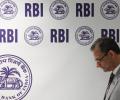
Uncertainties stemming from the West Asia crisis and its potential impact on inflation and economic growth were key factors in the Reserve Bank of India's Monetary Policy Committee (MPC) decision to maintain the status quo on interest rates, according to the recently released MPC meeting minutes.

Will the rupee keep falling in value against the US dollar? What will be its impact?

I wonder if I can rest assured -- before the election ink on my finger fades -- that my home state is at the threshold of a better future, wonders Vice Admiral Biswajit Dasgupta (retd).

Indian stock markets experienced a significant rally following the announcement of a US-Iran ceasefire, coupled with a drop in crude oil prices. The Sensex and Nifty both closed nearly 4 per cent higher, mirroring gains in global markets.
Foreign portfolio investors (FPIs) withdrew a substantial amount from Indian equities in the first half of March, driven by geopolitical tensions, rupee depreciation, and concerns about crude oil prices.

Speculation about rising competition from global majors has led to shares of major Indian automobile manufacturers such as Mahindra & Mahindra (M&M), Maruti Suzuki India, and Tata Motors taking a hit on the BSE.

Prices of televisions are expected to rise by 3-4 per cent from January next year on account of the rising cost of memory chips and depreciation of the rupee, which recently crossed the 90-to-a-dollar mark for the first time.

'She was not a yes person. She would tell the truth and her feelings to Indira Gandhi, and Indira Gandhi would value her opinion. The same was the case with Rajiv Gandhi who would value her opinion.'

The rupee is undervalued as compared to its peers, shows the latest data from the Reserve Bank of India (RBI), even as the local currency keeps hitting new lows.
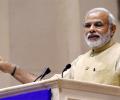
Union Minister Pankaj Chaudhary stated that Prime Minister Narendra Modi strengthened the Enforcement Directorate (ED) to combat financial crimes like money laundering and corruption, dismissing allegations of it being used to target political opponents.
A Delhi court has remanded I-PAC co-founder Vinesh Chandel to the Enforcement Directorate's custody for 10 days in connection with a money laundering case involving alleged diversion of funds worth crores of rupees.
Foreign investors pulled out Rs 21,000 crore (around $2.3 billion) from Indian equities over the last four trading sessions amid deteriorating global risk sentiment triggered by the West Asia crisis.

Defence Minister Rajnath Singh highlights India's transformation in sports, moving beyond cricket and hockey to achieve global recognition, driven by government investment and initiatives like the Khelo India programme.
Union Minister Pankaj Chaudhary stated that Prime Minister Narendra Modi strengthened the Enforcement Directorate to combat financial crimes like money laundering and corruption, dismissing allegations of it being used to target political opponents.
The Enforcement Directorate conducted raids on executives of political consultancy firm I-PAC and others in connection with a money laundering case linked to an alleged coal scam in West Bengal.

The actor will be seen playing the role of a small-time real estate broker.

Indian benchmark equity indices experienced a significant downturn, with the Sensex plummeting over 800 points and the Nifty falling sharply, driven by rising crude oil prices, geopolitical tensions, and foreign capital outflows.

The Delhi High Court has upheld a trial court's order declaring UK-based arms consultant Sanjay Bhandari a 'fugitive economic offender' in a money laundering case, allowing the Enforcement Directorate to proceed with confiscating his assets.
